The company
Wooki sells branded footwear and sporting apparel — sneakers, sandals, winter boots, and skateboard shoes — from a warehouse in Gatineau, Quebec, shipping across Canada and the United States.
Where they started
Adrien Lavoie's path into ecommerce started small and informal: as a high school student, he helped a local bicycle shop owner list products on eBay. He kept selling as a side hustle while studying communications in Ottawa, eventually partnering with a friend in 2011 to launch a store called boardshopw — run out of his parents' basement.
What they did
- Started the catalog with general outdoor goods and accessories, then noticed skateboard shoes were performing disproportionately well and shifted the assortment toward that category.
- Leaned into eBay's built-in international reach rather than building separate international sales infrastructure — in Lavoie's words, on eBay "international potential buyers are one click away," letting a small Quebec-based seller reach North American and international buyers without a dedicated international sales operation.
- Reinvested growing margins into physical infrastructure: opened a brick-and-mortar store in Gatineau in 2013, then moved into progressively larger warehouse space as order volume grew.
- Built out a small but dedicated operations team — four warehouse employees plus six trusted product distributors — to handle sourcing and fulfillment at the volume the business had grown into.
The numbers
Fifteen years after starting in a basement, eBay's case study reports Wooki operates an 11,000-square-foot warehouse, ships roughly 200 items a day across North America with two-day delivery, and has won eBay's Young Entrepreneur Award and the Micro Multinational Award for eBay Canada. One specific resale example the case study highlights: a pair of Jeremy Scott x Adidas sneakers bought for $55 and resold for nearly $1,000 — a reminder that margin on the right item, at the right time, can carry a lot of a growth story on its own.
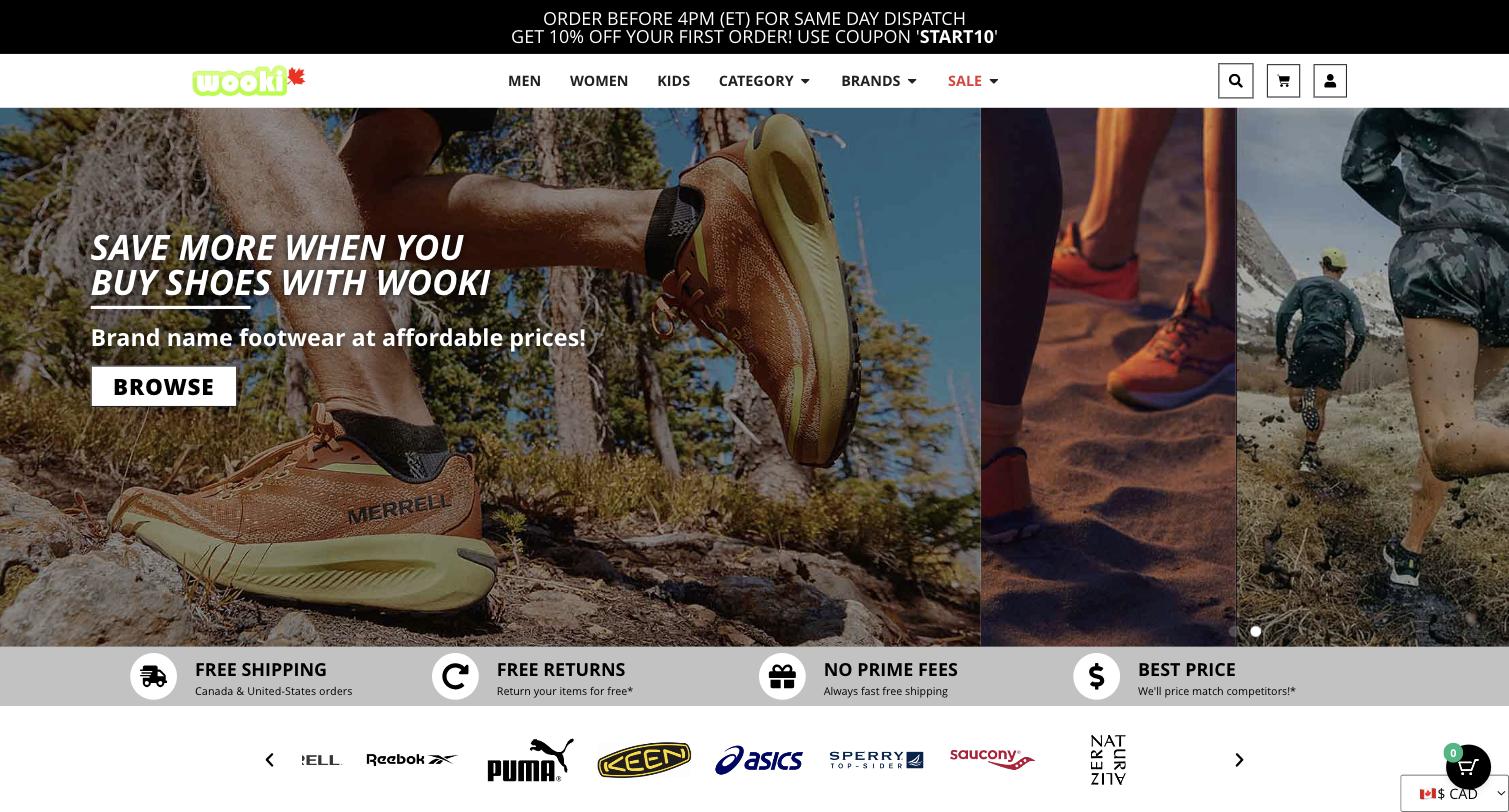
Source: eBay Inc.'s Wooki case study. ~200 items shipped daily across North America with 2-day delivery.
Why this worked
There isn't a single dramatic tactic here — the story is closer to a compounding pattern than a single breakthrough. Noticing which sub-category (skateboard shoes) was outperforming the rest of the catalog and shifting weight toward it, reinvesting margin into physical space only as volume actually justified it rather than ahead of demand, and using eBay's existing international buyer base instead of building separate international sales channels are all decisions that trade a faster, riskier path for a slower, more durable one. Fifteen years is a long timeline by ecommerce case-study standards, and that's arguably the point: this is a growth story built on sustained reinvestment, not a single campaign or channel change.
What to take from this if you're earlier in this path
If part of your catalog is quietly outperforming the rest, that's usually a stronger signal than it gets credit for — worth deliberately shifting sourcing and merchandising weight toward it rather than treating every SKU as equally strategic. See The eBay Seller Launch Checklist if you're earlier than that, and When (and Who) to Hire First for how to think about the point where warehouse and team growth actually becomes justified by order volume rather than anticipated ahead of it.
FAQ
Does eBay's "international buyers are one click away" framing mean cross-border selling on eBay requires no extra setup? Not entirely — eBay's own international shipping and buyer-reach tools do lower the barrier significantly compared to building separate country-specific storefronts, but customs, duties, and return handling for cross-border orders still require some setup. See How to Choose Which International Market(s) to Expand Into for what to plan around before assuming international demand converts to international sales automatically.