The company
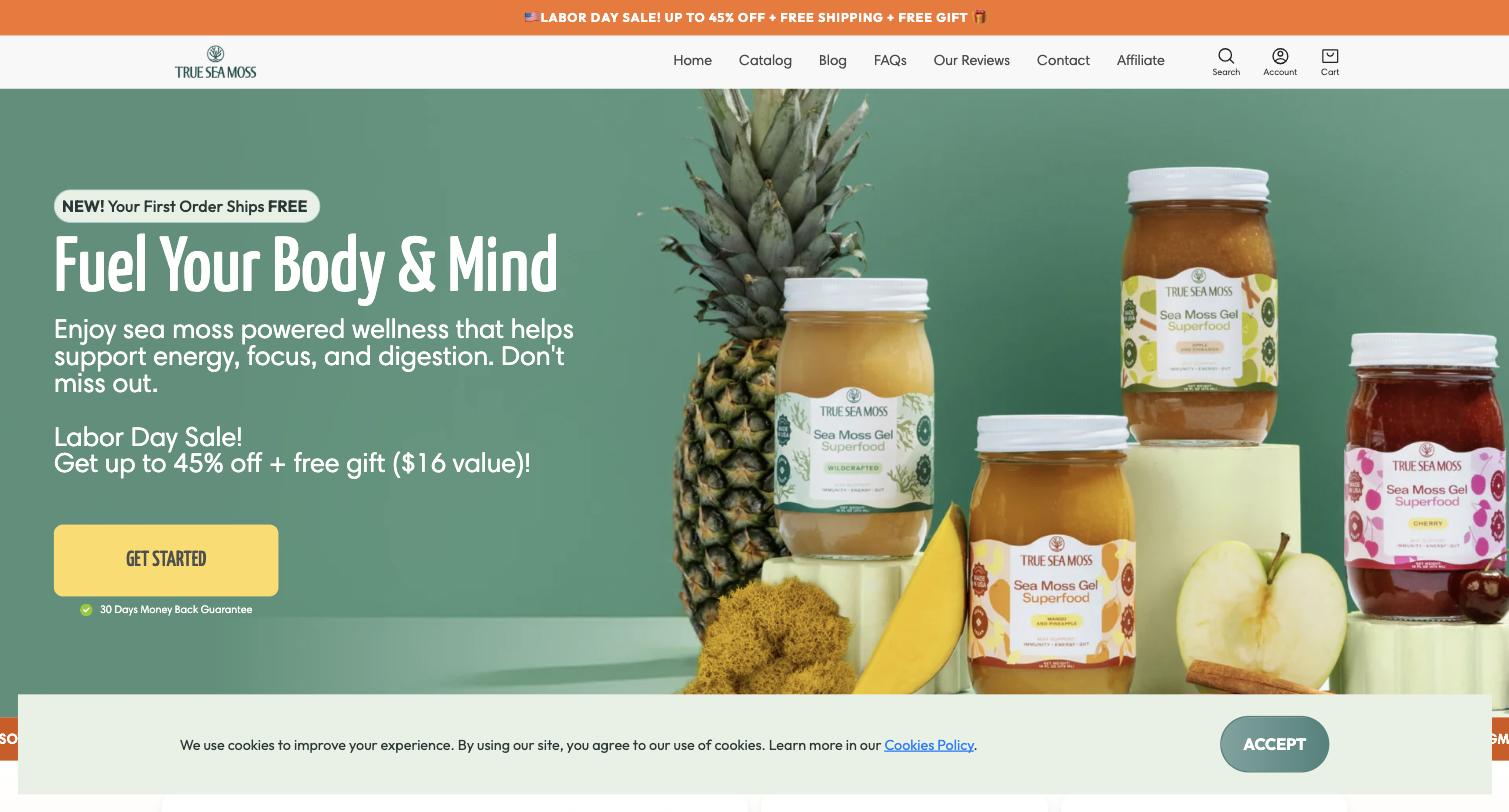
True Sea Moss sells wildcrafted sea moss products — gels, powders, capsules, and electrolyte blends — positioned as a "pure ocean nutrition" wellness brand, sold both on its own DTC site and on Walmart Marketplace.
Where they started
Per Walmart Connect's account, True Sea Moss "initially lacked clarity on how to navigate and grow on Walmart Marketplace" — a common problem for a seller with a real, differentiated product but no established playbook yet for turning Walmart's ad tools into consistent growth across a catalog that spans gels, powders, and capsules in multiple flavors.
What they did
- Sponsored Brands campaigns for broad product discovery across the catalog.
- Sponsored Videos campaigns specifically for the gel line — the most visually distinctive product, and one that benefits from showing texture and use rather than a static product shot.
- Variant product group segmentation — reorganizing listings by flavor and format so Sponsored campaigns could target keywords with real precision, instead of running one broad campaign across a mixed catalog.
- A deliberate full-funnel structure: upper-funnel awareness tactics (video, brand ads) paired with targeted search bidding, organized around those same product groupings, so the brand stayed visible at every stage of a shopper's path rather than only at the final search.
The numbers
Over a four-month window (January 1 – May 1, 2025), Walmart Connect's case study reports a 1,008% year-over-year sales increase, more than 6 million ad impressions, and 81% of resulting orders from new-to-brand customers — meaning the large majority of the lift came from acquiring shoppers who hadn't bought from True Sea Moss on Walmart before, not from re-marketing to existing ones.
Source: Walmart Connect's True Sea Moss case study. 81% of orders were from new-to-brand customers.
Why this worked
The mechanism worth noticing is the sequencing: organizing the ad structure around variant groupings — not one catalog-wide campaign — let each ad dollar match a shopper's actual search intent (a specific flavor or format) instead of sending all traffic to a generic brand page. Layering Sponsored Videos onto the gel line specifically, rather than applying video spend evenly across the catalog, put that heavier-production format where it had the most to show. Together, a full-funnel budget did double duty: building awareness while still capturing high-intent search traffic on properly segmented terms.
What to take from this if you're earlier in this path
If you're running Walmart Sponsored campaigns across a catalog with real product variation — flavors, sizes, formats — check whether your keyword targeting is actually organized around those variant groups or bundled into one catalog-wide campaign. See How to Set Up a Walmart Connect Campaign, and The Walmart Seller Launch Checklist if you haven't listed on Walmart Marketplace at all yet.
FAQ
Does an 81% new-to-brand rate mean paid ads are doing all the work? It means the reported sales lift is overwhelmingly first-time-customer growth, which is common in the first months of an aggressive Walmart Connect push — Walmart's attribution counts a sale as ad-driven when it follows a qualifying ad interaction, a pattern that's typical for a brand still building organic ranking and repeat-purchase history on a channel it's new to.