The company
Seltzer Goods sells artistically designed home goods — jigsaw puzzles, stationery, and accessories — built around collaborations with independent illustrators, sold through both wholesale retail accounts and its own DTC site.
Where they started
In the early months of the COVID-19 pandemic, Seltzer Goods' wholesale business — a major part of its revenue — collapsed as retail partners closed or cut orders. The brand had exactly the kind of product people stuck at home actually wanted, and enough inventory sitting in the warehouse to sell it, but not nearly enough consumer-facing brand awareness to convert that inventory into direct sales fast enough to offset the wholesale loss.
What they did
Inflow, the agency behind this case study, built a structured, funnel-based Facebook Ads program rather than a single broad campaign:
- Installed the Facebook pixel ahead of launch to establish a baseline read on site visitors and purchasers before spending on ads.
- Applied a "See, Think, Do" funnel framework, with the most conversion-focused effort aimed at cold audiences who hadn't encountered the brand yet.
- Built lookalike audiences from three distinct visitor segments — people who'd viewed key pages, people who'd added to cart, and past purchasers — rather than one generic lookalike source.
- Used automatic placements across devices so Facebook's delivery algorithm had the most room to find efficient impressions.
- Set delivery optimization to a 1-day click window, appropriate for a lower-priced, impulse-friendly product like a puzzle.
- Preserved existing post IDs on ads to keep accumulated likes, shares, and comments as visible social proof, rather than starting new ads from zero engagement.
- Tested two distinct single-image creatives against identical ad copy, isolating the image as the one variable.
- Scaled ad budgets 10-15% every few days, but only for campaigns where ROAS was already exceeding 5x — a discipline rule rather than scaling everything at once.
The numbers
Over a 30-day period, Inflow reports a 9.68x return on ad spend (Facebook-attributed), a 785% increase in monthly revenue, and a $4.87 cost per customer acquisition. Paid social ended up generating 25% of monthly revenue. The campaign also had knock-on effects beyond paid: 183% growth in organic traffic, a 6.6% organic conversion rate, a 931% increase in branded puzzle-specific search queries, and a 1,700% increase in organic Instagram referral traffic and transactions.
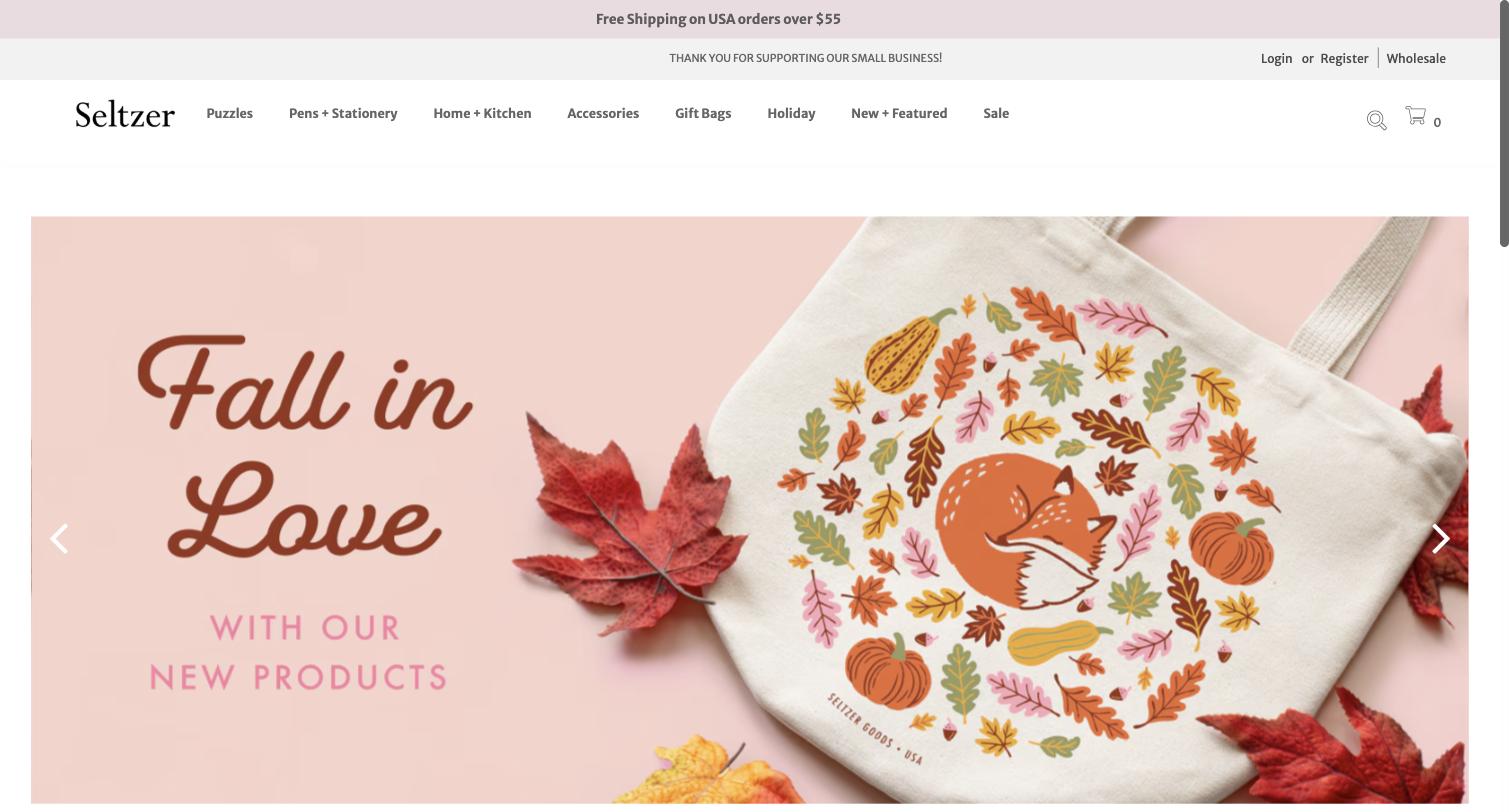
Source: Inflow's Seltzer Goods case study. 9.68x ROAS; $4.87 cost per acquisition.
Why this worked
The mechanism worth copying isn't "we ran Facebook ads and it worked" — it's the discipline in how spend was allocated. Segmenting lookalikes by three different visitor behaviors (not one blended audience), isolating creative as the single tested variable, and scaling budget only when ROAS already cleared a 5x bar all reduce the chance of scaling a campaign that only looks good on the surface. The organic side-effects — branded search volume up nearly 10x, Instagram referral traffic up 17x — are also a reminder that a strong enough paid push can pull organic and social discovery along with it, rather than those channels being fully separate.
What to take from this if you're earlier in this path
If you're running Facebook/Meta ads without a pixel baseline established before launch, or without segmenting lookalike sources by different visitor behaviors, that's the first gap to close before adding budget. See Retargeting Fundamentals for how the different audience layers here fit together, and The Paid Social Creative Testing Playbook for how to structure a creative test like the single-variable image test used here.
FAQ
Is a 785% revenue increase realistic outside of the unusual pandemic demand spike Seltzer Goods was riding? No — this result happened during a specific, temporary surge in demand for at-home entertainment products, which is not a normal baseline condition. The transferable part isn't the multiplier; it's the audience-segmentation and budget-discipline structure, which would produce a smaller but still real lift applied to ordinary, non-pandemic demand conditions.