The company
Knock Knock is a Los Angeles gifts, stationery, and humor-book publisher, founded in 2002 by former book editor Jen Bilik. Now operating for more than two decades under a parent entity called Who's There Group (after a 2018 acquisition of two sister studios), the brand's products are the kind of witty notepads, journals, and gift books sold through independent gift shops and bookstores worldwide — a category where discovering the right small, independent retailers one at a time is normally slow, relationship-driven work.
Where they started
As a 20-plus-year-old wholesale brand, Knock Knock already had an established retailer base built through trade shows, sales reps, and direct outreach — the traditional wholesale playbook covered elsewhere on this site. Faire's own account of this case frames the brand's challenge as one of reach and pace: finding new independent retailers one relationship at a time doesn't scale as fast as a brand with Knock Knock's catalog size and production capacity can supply.
What they did
Faire's marketplace model flips the traditional wholesale discovery process: instead of a brand's sales team finding retailers, independent retailers already browsing Faire's marketplace can discover a brand's catalog directly, request net-terms payment, and place a first order with far less friction than a traditional wholesale relationship typically requires up front. For an established brand like Knock Knock, that meant its existing line sheet and catalog could be surfaced to a much larger, self-serve pool of vetted independent retailers than direct outreach or trade-show floor traffic alone could reach in the same amount of time.
The numbers
Faire's published case study headline states Knock Knock is now greeting 4x more new retailers each month through Faire than its prior pace — a multiplier on new-account acquisition rate, not a claim about total revenue. (This site's research for this update could not load Faire's full case-study body text to extract additional supporting detail beyond that headline figure, which is Faire's own published claim as of February 2024; treat the account above as intentionally scoped to what could be independently verified rather than embellished with unconfirmed specifics.)
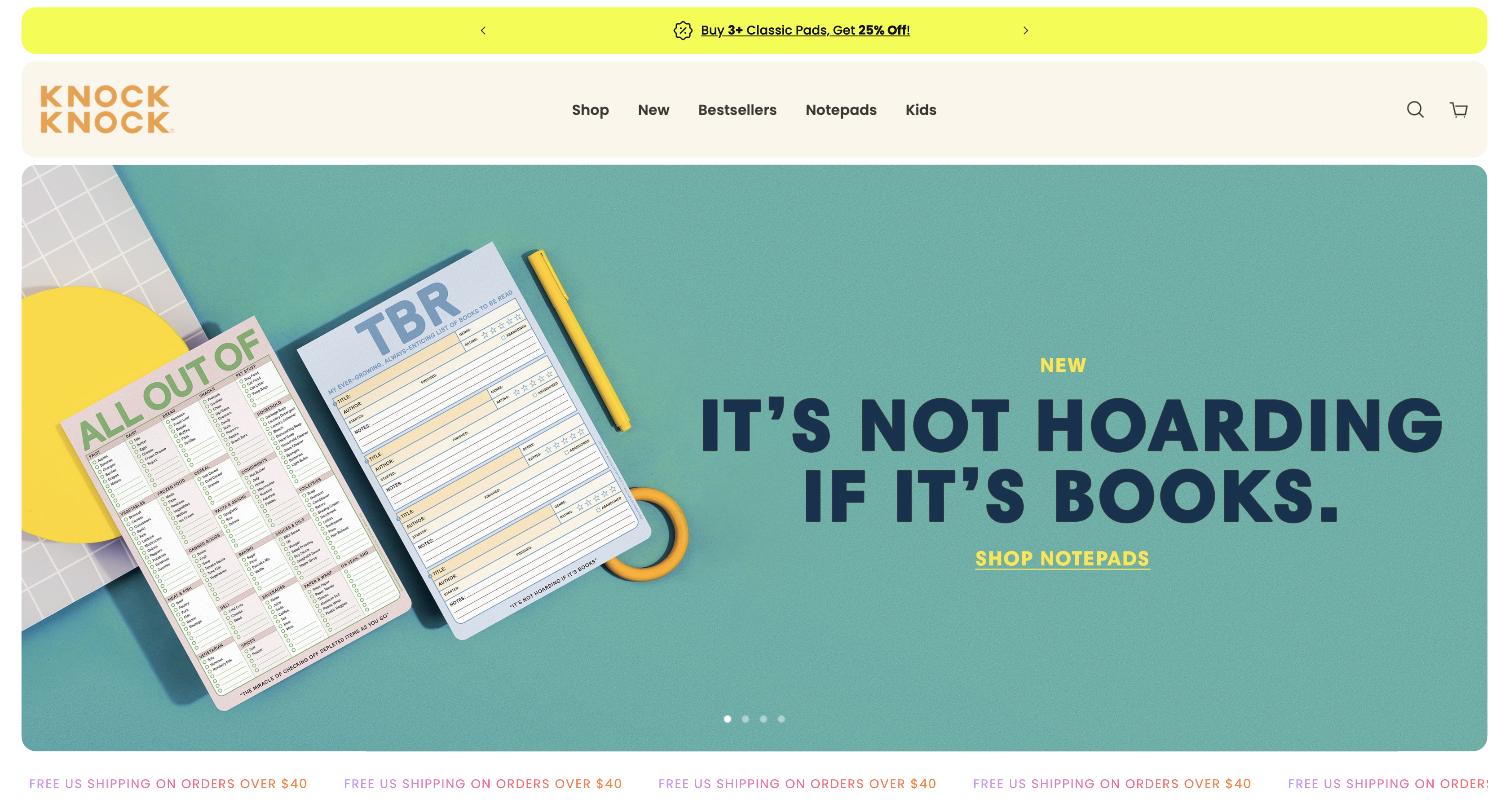
Source: Faire Newsroom, published Feb 21, 2024 — a rate multiplier, not a revenue figure.
Why this worked
The mechanism here is really about distribution of discovery effort, not a new sales tactic. An established brand with a ready catalog and line sheet — the exact assets Building a Line Sheet and Wholesale Catalog walks through building — can plug into a marketplace's existing retailer traffic rather than generating every lead itself. That's a different kind of leverage than a better cold-outreach script or a bigger trade-show booth; it doesn't replace either of those (see Working Trade Shows for Wholesale) but adds a channel that scales with the marketplace's own retailer base rather than with your sales team's headcount.
What to take from this if you're earlier in this path
Faire-style marketplaces are a meaningfully lower-friction on-ramp for a brand that already has its wholesale fundamentals in order (pricing, minimums, a real line sheet) than for one still figuring those out — get Types of Retail Buyers and Channels and a working line sheet in place first, then treat a wholesale marketplace as an additional discovery channel alongside direct outreach and trade shows, not a replacement for either.
FAQ
Does "4x more new retailers" mean Knock Knock's revenue quadrupled? No — that figure describes the rate of new retailer accounts added per month, not total revenue or even average order value per retailer. A faster pace of small new accounts and a proportional revenue increase are not the same claim, and Faire's published case study doesn't equate the two.