The company
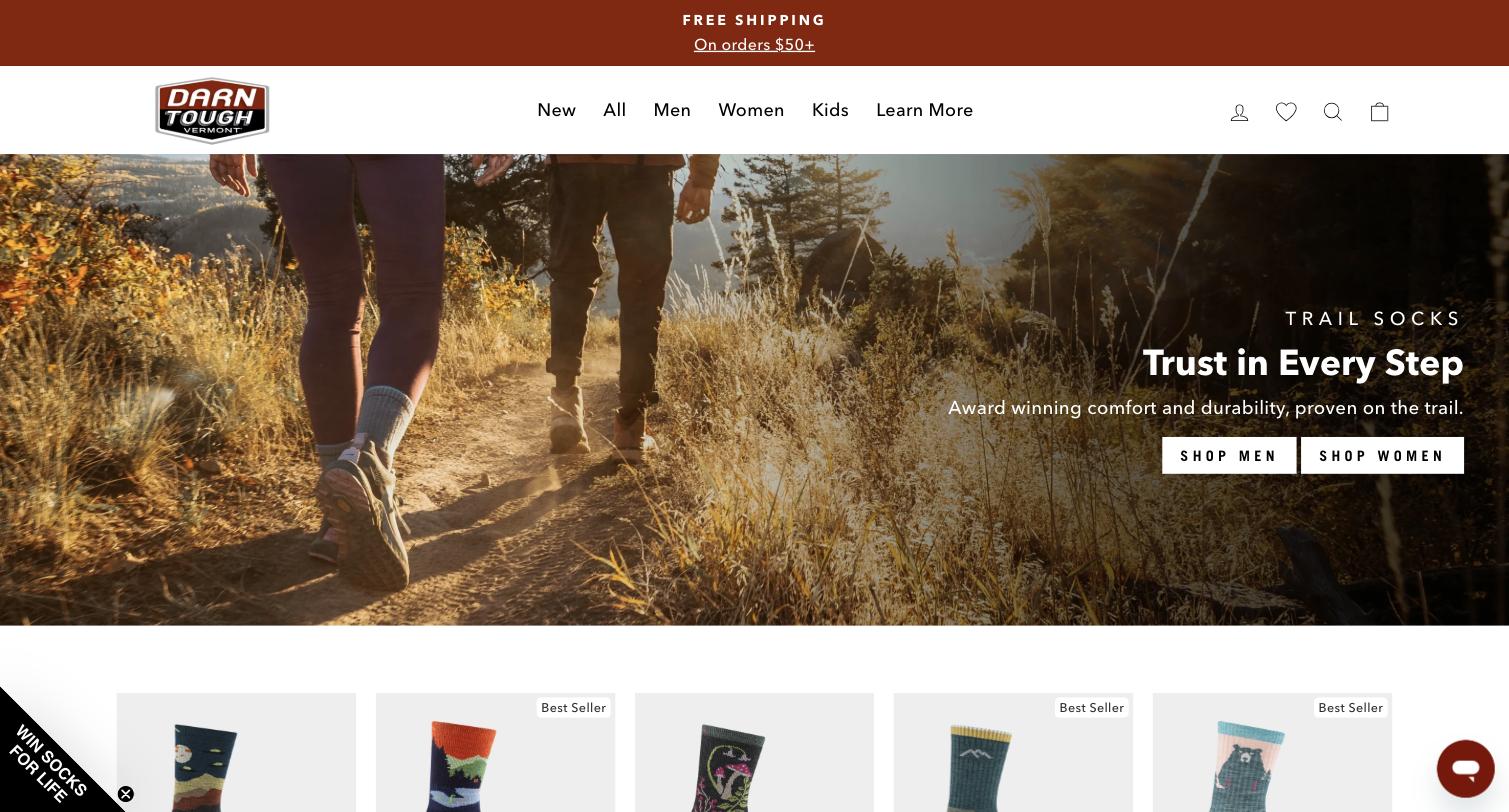
Darn Tough Vermont makes premium merino wool socks — hiking, running, work, and lifestyle styles — manufactured in Vermont and long established as the top hiking-sock brand through retail before launching its own DTC site, darntough.com, in 2016.
Where they started
Every Darn Tough sock ships with an Unconditional Lifetime Guarantee — if it wears out, the company replaces it, no receipt or time limit required. That's a genuinely strong brand promise, but it complicates a straightforward "buy more, earn more" loyalty model: a customer invoking the guarantee isn't making a new purchase, and a customer who never needs to invoke it might not buy again for years regardless. The team also assumed a loyalty program would require dedicated headcount to run, which was reason enough to keep delaying it.
What they did
- Built a three-tier program — Quarter Club, Boot Troop, and Over The Calf — with escalating point-earning rates (5 to 9 points per dollar) as customers moved up tiers, rather than one flat rewards rate.
- Awarded bonus points for actions beyond repurchase: birthdays, referrals, and product reviews, giving customers reasons to engage with the program between purchases.
- Integrated loyalty data with Klaviyo so point balances and tier status could feed personalized email campaigns instead of sitting in a separate system.
- Used AI-powered "Points Multiplier" campaigns to push bonus points on specific product categories the brand wanted to expand into, rather than applying multipliers brand-wide.
- Built a sock quiz that doubled as a member-education tool and a way to collect purchase-intent data from members.
- Ran a structured referral program: $5 off for the new customer, 600 points back to the referrer.
The numbers
Since launching in June 2024, LoyaltyLion's case study reports the program has enrolled more than 440,000 members, drives 13% of Darn Tough's total revenue, and has produced 2.8x higher customer lifetime value among members who redeem points versus those who don't. Referrals alone brought in 8,000 new customers, and one AI-targeted Points Multiplier campaign reached a 54% conversion rate across roughly 4,000 completed customer journeys. The majority of DTC orders now come from loyalty members.
Source: LoyaltyLion's Darn Tough Vermont case study. 13% of total revenue now runs through the program; redeeming members show 2.8x higher LTV.
Why this worked
The lifetime guarantee could have made a loyalty program feel redundant — why reward someone for coming back when the brand already gives them a reason to keep the same pair of socks indefinitely? The fix was to stop building the program around repurchase frequency and build it around the other things a genuinely loyal customer already does: refer friends, leave reviews, engage with the brand's content, and eventually buy into new categories. Rewarding those specific actions with bonus points, rather than just points-per-dollar, is what let the program generate meaningful revenue share despite selling a product engineered to be replaced as rarely as possible.
What to take from this if you're earlier in this path
If your product's own value proposition — a lifetime warranty, exceptional durability, a true one-time purchase — seems to work against a traditional repeat-purchase loyalty model, look at what non-purchase actions your most loyal customers already take: referrals, reviews, category exploration. Consider building the point structure around rewarding those directly, the way Darn Tough's referral and review bonuses do. See Loyalty Programs for Ecommerce for how to structure a tiered program, and Customer Retention Strategy for retention levers beyond loyalty points specifically.
FAQ
Does 13% of revenue from loyalty members mean the other 87% comes from non-members? Not exactly — LoyaltyLion's figure specifically measures revenue attributable to loyalty-program transactions (orders where points were earned or redeemed), which understates the program's real influence, since many loyalty members also make ordinary purchases that aren't captured in that specific transaction-level metric.