The company
BUBS Naturals sells performance- and longevity-focused nutritional supplements — collagen peptides, MCT oil creamers, electrolytes — direct-to-consumer, built around subscribe-and-save as the intended default way to buy rather than a secondary option tacked onto checkout.
Where they started
BUBS already had a clean signal that subscription mattered: its own data showed subscribers generated 4x the lifetime value of one-time buyers. The problem wasn't the product or the math — it was adoption. Only around 20% of first-time customers were signing up for a subscription at all, which meant most new customers were starting in the lower-LTV bucket by default. The brand needed to fix that without discounting so deep it eroded the margin that made subscribers valuable in the first place.
What they did
- Restructured product pages so subscription, not one-time purchase, was the default selected option — reframing the decision a shopper had to make, rather than just promoting subscription alongside it.
- Introduced a Welcome Box worth $100+ for first-time subscribers, positioned as a value decision (get more, free) rather than a discount decision (pay less) — a deliberate reframe of what a new subscriber was actually being offered.
- Deployed upsell and cross-sell widgets at multiple points in the journey — pre-checkout modals, in-cart offers, and post-purchase flows — rather than relying on a single upsell moment.
- Added a specific upsell widget nudging single-month subscribers toward three-month plans, targeting subscription length directly rather than just initial signup.
- Used Recharge's cohort reporting to track LTV, retention, and payback in real time instead of relying on lagging monthly reports.
The numbers
Within one year, BUBS reports first-time subscription adoption rose from about 20% to over 70%, new subscriber growth tripled, subscribers continued to show 4x the LTV of non-subscribers, and 25% of eligible customers accepted the upgrade to a larger subscription plan before checkout.
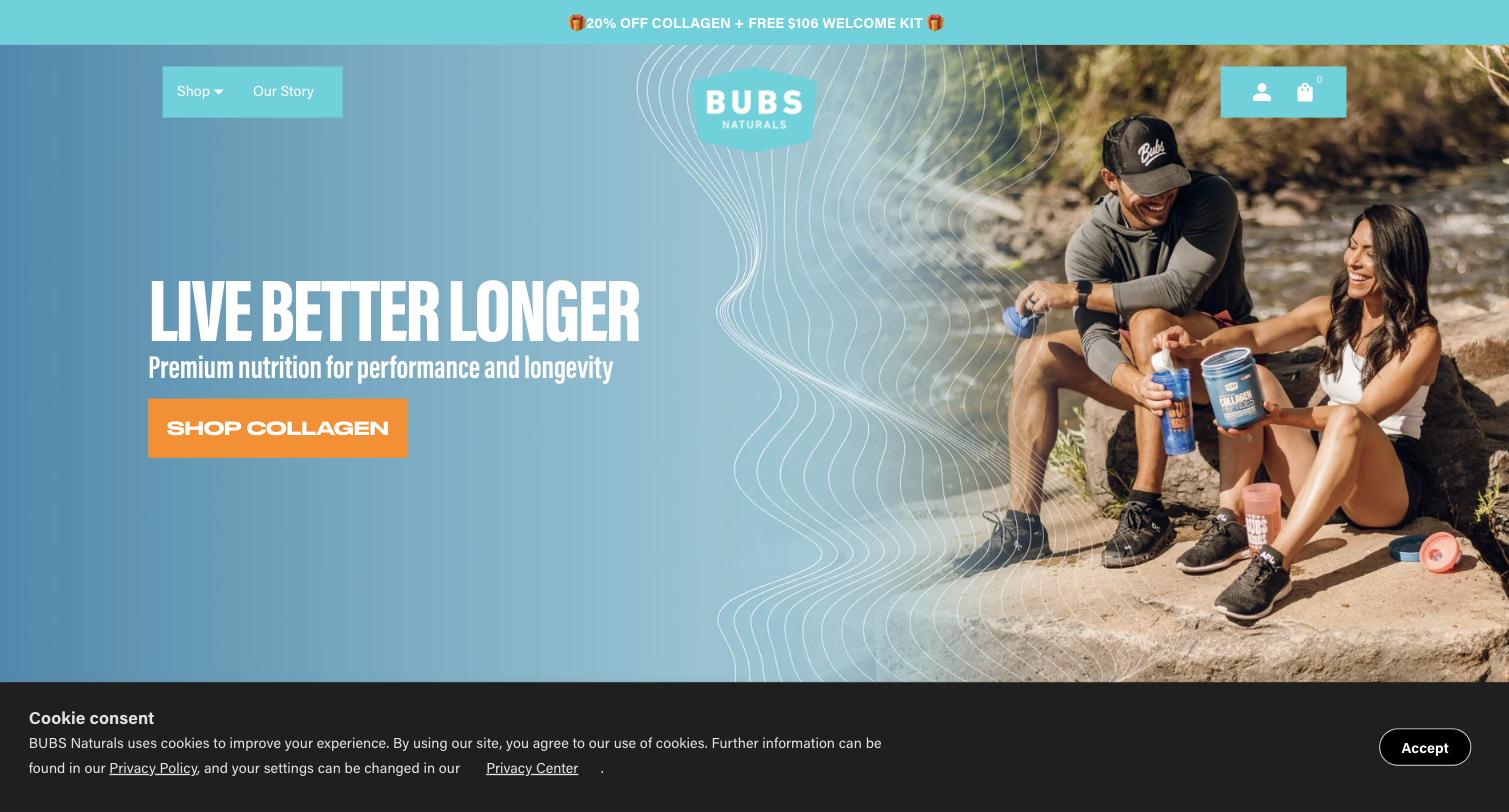
Source: Recharge's BUBS Naturals case study. New subscriber growth: 3x within one year; subscribers show 4x the LTV of non-subscribers.
Why this worked
The through-line is that BUBS treated the default and the framing of the first-purchase decision as the actual lever, not the subscription discount rate. Making subscription the pre-selected option removes a decision step a shopper would otherwise have to actively make; leading with a high-value welcome box instead of a percentage discount reframes what's being decided — getting more, versus paying less — in a way that doesn't require permanently discounting the product to look attractive. Neither change touched the underlying subscription price or terms; both changed how the choice was presented.
What to take from this if you're earlier in this path
If your subscription program already has healthy retention and LTV numbers but low adoption, look first at how the choice is framed and defaulted on the product page and at checkout before assuming you need a bigger discount to fix it. See Subscriptions for DTC Brands for how to structure that offer, and DTC Checkout Optimization and Cart Abandonment for where in the funnel that framing actually needs to live.
FAQ
Is a $100+ welcome box sustainable at BUBS's margins, or would a smaller version still work? Recharge's case study doesn't break out the box's cost basis, so that's not something this account can confirm either way — the reported result is the adoption and LTV lift, not the unit economics of the box itself. Model a similar offer against your own subscriber LTV first, using something like the DTC Unit Economics & LTV:CAC framework, before committing to it.